
Coral Reef Restoration
Blast Fishing
Our house reef has previously been damaged by blast fishing, a method that uses explosives to kill large numbers of reef fish for easy collection.
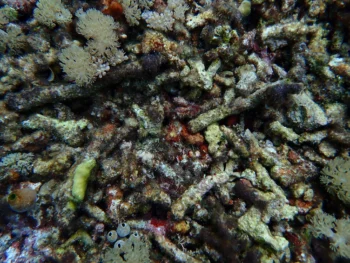
Dead corals due to blast fishing
Although this practice is now illegal in Malaysia, it has caused significant harm, leaving extensive coral rubble fields that lack the structure and ecological function of a healthy reef.
Restoration
Since 2014, we have been actively restoring the reef in front of our resort near the arrival jetty.
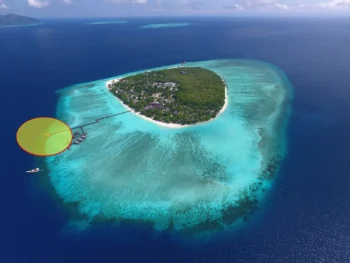
Reef Restoration Zone
Over the past few years, we have installed more than 25 cemented-steel-bar structures in various shapes.
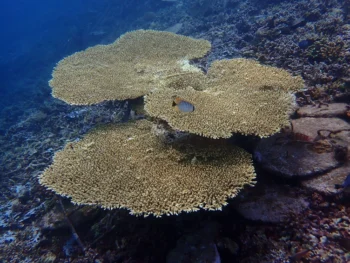
Steelbar – Table Coral
These structures provide a substrate for natural coral recruitment, support active coral replanting, and offer shelter for fish and invertebrates.
Corals are attached to the frames with zip ties, which secure them and allow tissue growth around the structure through a process called calcification.
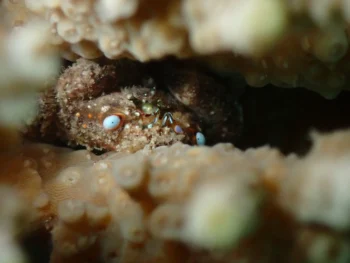
Ziptie – Corals
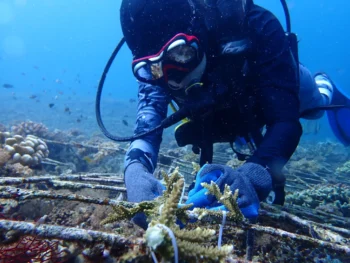
Attaching to steelbar frame
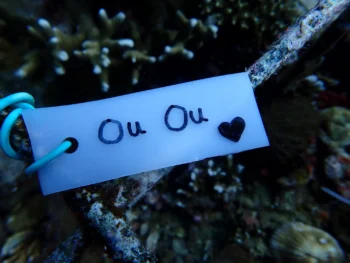
Ziptie – Guest Ou Ou
Coral Cookies
In 2026, we have introduced another restoration method called the coral cookies table, which involves two phases. First, broken coral fragments are collected from the seafloor and attached to a cement cookie structure using epoxy glue.
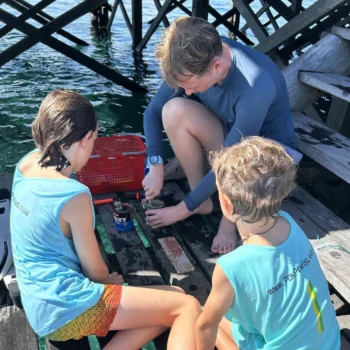
Preparing coral cookie with epoxy glue
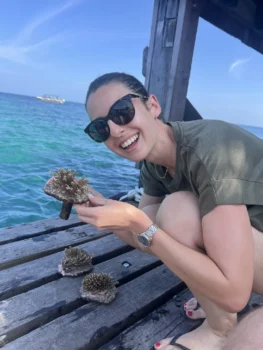
Coral Cookie
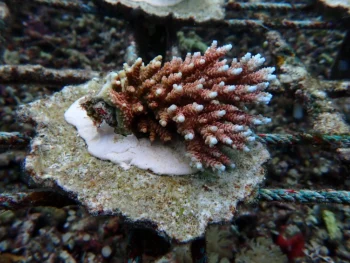
Coral Cookie
Once the corals are fully grown and reach maturity, the coral cookies are cemented back onto the rubble fields to stabilise them with living coral colonies, increasing coral and fish biodiversity on our house reef.
Support
You can support our conservation efforts by planting your own corals or sponsoring a coral cookie.
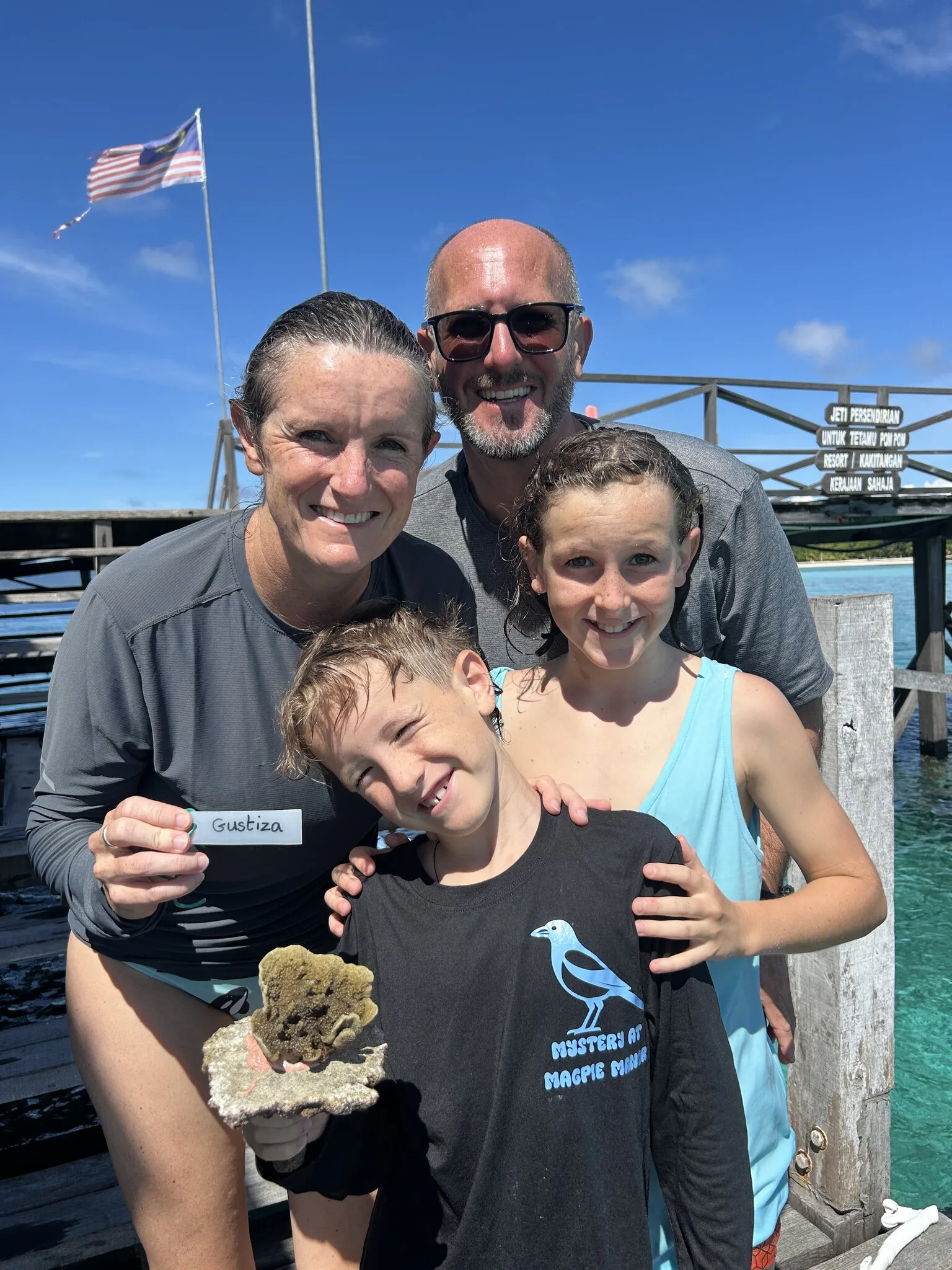
Thank you Gustiza and family for the support
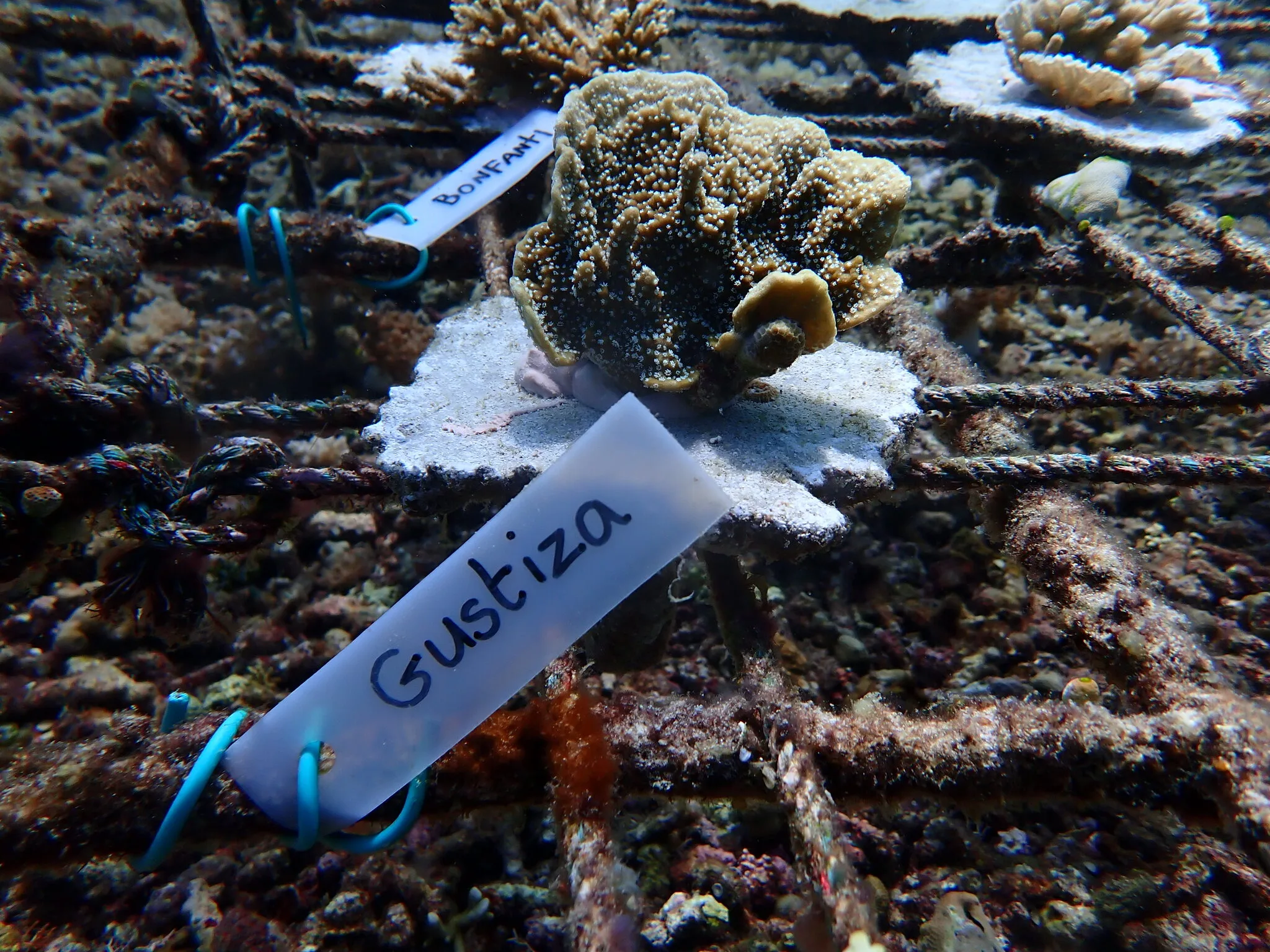
Gustiza Coral Cookie
Join our coral reef restoration project to make a positive impact not just on this reef but on the entire marine ecosystem worldwide.
View our PDF for an overview of our current marine conservation activities.


Crown-of-thorns clean up with surprise!!
The crown-of-thorns (Acanthaster planci) is a starfish native to coral reefs in the Indo-Pacific region. The starfish A. planci eating a coral Generally, on healthy coral reefs, this coral-eating starfish plays a [...]

Artificial frames check
Hello everyone! Our corals conservation team has a new entry: the dive instructor Sue ? We spent almost 75 minutes around the frames area, removing the bleached corals and checking the attachment of the [...]
A surprise at Beach Villa 1
Last night, our Turtle Conservation Team ventured out with some guests to patrol the island and look for turtle tracks! We rounded all the island, but we couldn’t find any turtle track…and we were [...]


A big thank to Jessica and Manuela: Our Coral Sponsors
Yesterday, I have been in the water with 2 amazing Italo-chinese girls, Jessica and Manuela. We collected and planted some healthy corals and thanks to their contribution our garden starts to get full of [...]

A HUGE THANK YOU TO OUR NEST SPONSORS FOR THE MONTH OF JUNE!
This month has been particularly busy here in Pom Pom… The reproductive season for green and hawksbill turtles finally started, and we relocated several nests. Turtle nest relocation is a good conservation strategy and, [...]


Reef rangers against plastic
.....and here we go again! To keep our house reef and beach clean and healthy, our reef rangers remove all the garbage around Pom Pom. During the last few weeks, a lot of garbage [...]